
Kingston, Jamaica: The first Interceptor city
Back to updatesThe Ocean Cleanup has now deployed seven Interceptors in the Jamaican capital, completing the first phase of our joint project to eliminate plastic pollution in Kingston Harbour. 2024 will see 4 more Interceptors arrive in Kingston, this time focusing on Hunts Bay, and all aimed at enabling the transformation of the city’s waterways while reducing plastic emissions into the Caribbean Sea.
The iconic city of Kingston: home to legendary music, a cultural heritage second to none – and one of the world’s largest natural harbors.
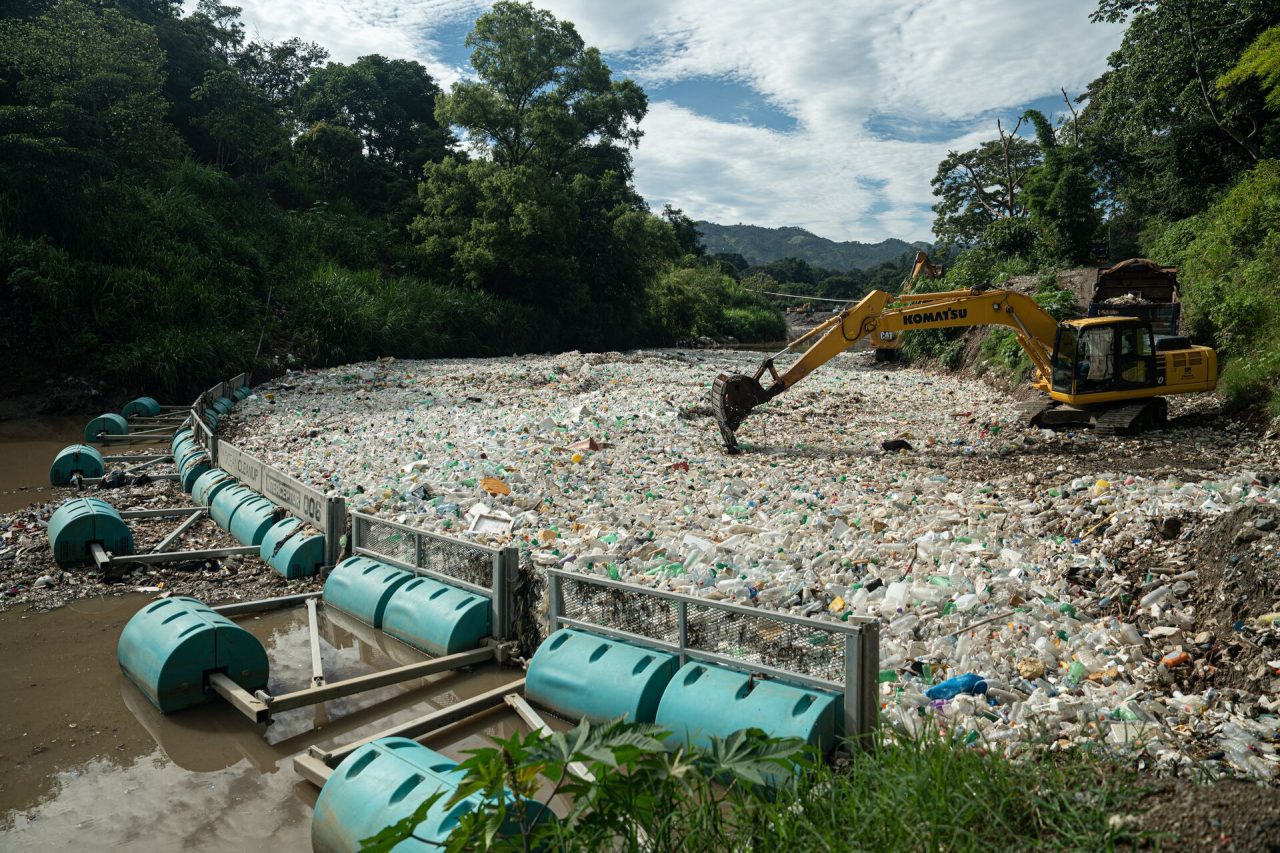
The Ocean Cleanup has partnered with Clean Harbours Jamaica and the GraceKennedy Foundation to deploy a range of Interceptors throughout the city’s drainage gullies, aiming to prevent an estimated 1000 tons of trash flowing yearly into Kingston Harbour, and further into our shared oceans.

The completion of this first stage marks a key step forward for our joint project in Jamaica. Our objective of tackling the main sources of waste into Kingston Harbour has been completed – now we are ready to move to other challenges in this city, starting with Hunts Bay.
The learnings and data we have gathered so far will allow us to optimize our technology and operations, and expand our network of Interceptors across the city to enable the transformation of its waters with local, regional and global benefit.
FROM GULLY TO OCEAN
A Kingston first-timer may wonder: what exactly is a gully?


A gully is a narrow waterway used to drain water away from a city. In Kingston, water is drained into Hunt’s Bay and Kingston Harbour through a system of these gullies and tributaries. While some gullies are large (such as the enormous Sandy Bay gully, which drains an area of over 50 km2 ), others are narrow and located in heavily populated urban areas. During heavy rains, floods can cause gullies to become heavily polluted with plastic and other municipal debris. This waste can cause serious harm to the local environment, and especially to mangroves, which play a crucial role in maintaining the health of the river’s waters and are already under threat. The waste from these gullies flows directly into Kingston Harbour – and on towards the world-famous waters and coastlines of the Caribbean Sea.

INTERCEPTION: GULLY BY GULLY
The Ocean Cleanup uses a dual strategy to rid the oceans of plastic. Alongside our work to remove legacy plastic in the oceanic garbage patches (starting with the Great Pacific Garbage Patch) we also aim to cut the inflow by intercepting trash in the world’s most polluting rivers. While cleaning the riverine environment, this also prevents plastic reaching the oceans in the first place, and reduces damage to some of our planet’s most renowned Caribbean coastlines.
For each river deployment, we look to target our operations for optimal impact and maximum net benefit for the local community and the wider marine environment. Since our first exploratory visits to Jamaica in 2019 we have been working closely with local authorities and community organizations to find the best solution for the unique characteristics of Kingston’s gullies.
Even if we were able to stop every piece of trash in one gully, this would do little to address the overall problem in the harbor. Waste is not transported to the harbor through one single source, but from many smaller gullies – all of which needed to be individually addressed, and all within a similar timeframe.
In this light, we collaboratively created an innovative new model for trash interception in urban environments: a network of Interceptors in key gullies, technologically adapted for each location and serviced by a common offloading operation for maximum efficiency and tangible impact across the city. The first challenge was to tackle the various gullies bringing an influx of waste into Kingston Harbour.
INITIAL LEARNINGS
Our first Interceptors were deployed in Kingston in 2022, with the arrival of Interceptors 008, 009, 010, 011 to Kingston Pen Gully, Barnes Gully, Rae Town Gully, Tivoli Gully. The Interceptor Tender served as a common harvesting vessel between the Interceptors and the offload site.
Interceptors 012 (D’Aguilar Gully), 013 (Mountain View Gully) and 014 (Shoemaker Gully) followed in 2023.

Technologically, we identified early on that we would require a variety of Interceptor technologies. In general, Kingston’s gullies are too small for solutions such as our Interceptor Original – other options needed to be identified. Combined with the seasonal nature of the waste problem in Kingston, we concluded that customized floating Interceptor models provided the best option.
This also has the benefit of keeping maintenance simple; the oceanic environment of Kingston Harbour means conditions are harsher than in many of our other river operations, and more sophisticated technology may come with a cost to reliability. The Interceptor Barrier was therefore developed alongside the Interceptor Tender for these first three gullies.

During this phase we learned that the windy conditions in the harbor, combined with wakes from passing vessels, can cause the trash captured by the Interceptor Barrier to accumulate in areas which are difficult for the Interceptor Tender to reach. This caused delays during offloading, reducing our efficiency. We are currently developing ‘non-return barriers’ designed to address this problem.
We have increased operational efficiency by adding a second vessel (provided by our partners Clean Harbours Jamaica) to support the Interceptor Tender, allowing us to offload and transport more captured waste at a time. As our catch amount increases, we require more capacity while transporting waste to the offload site. With Interceptors spread across the city including the center, it is essential to maintain